

Key Highlights
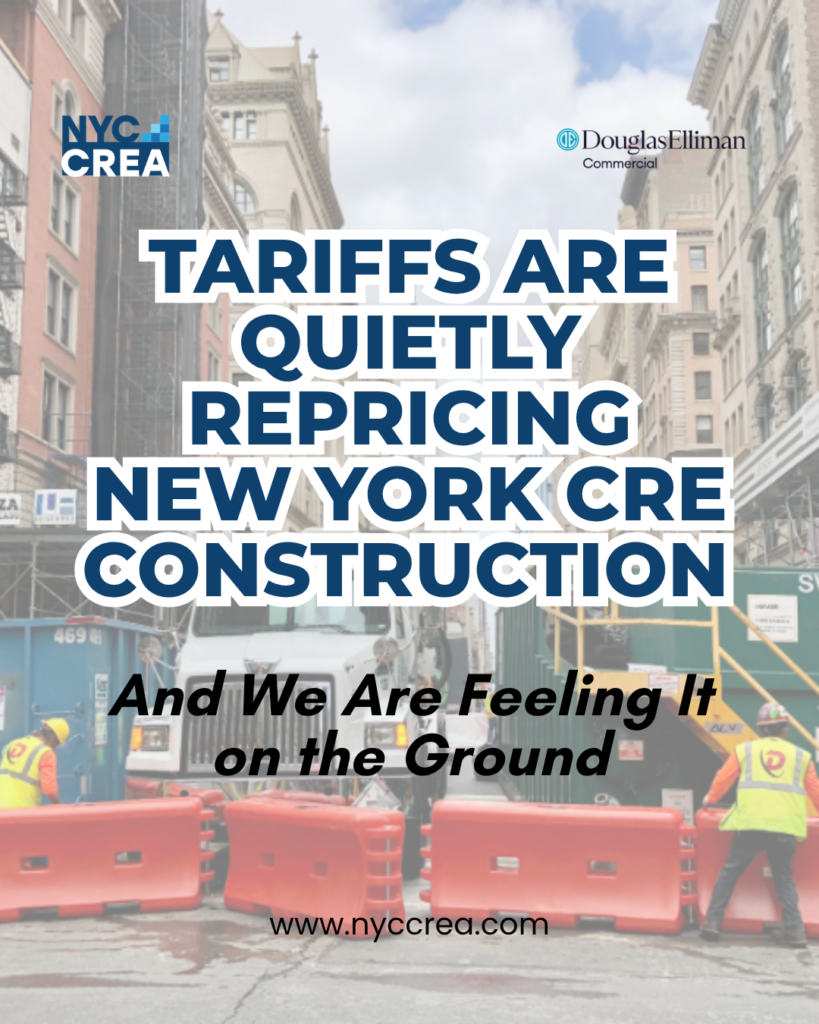
- Construction materials costs are up 6.0 percent vs 2024 and total project costs are up 3.0 percent, even after recent tariff easing
- At the 2025 peak, materials costs were projected to rise 9.0 percent, showing volatility is still very real even after policy shifts
- Some inputs like aluminum up 28 percent, steel up 12 percent, and copper up 21 percent in 2025 are reshaping feasibility across NYC projects
What We Are Seeing: Higher Construction Costs
As brokers at NYCCREA working across New York City, we are watching a clear but uneven shift in construction economics that is now baked into almost every deal conversation we have.
Based on Cushman and Wakefield’s Impact of Tariffs on U.S. CRE Construction Costs, construction materials costs are now estimated to be 6 percent higher than the 2024 baseline, while total project costs are up about 3 percent under current tariff rates as of April 7, 2026.
Even though this is an improvement from the 9 percent peak increase in materials costs during summer 2025, the direction is still upward pressure, not relief. And this is happening alongside a cumulative 40 percent rise in the Producer Price Index for construction industries over the last 5 years, signaling that this is not a short cycle adjustment but a structural repricing of development.
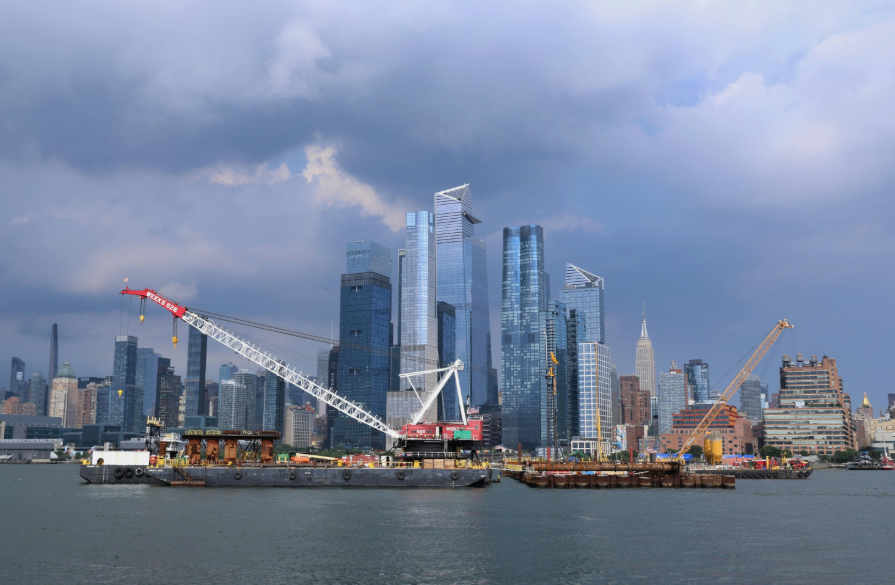
In New York, where feasibility margins are already tight, this matters more than in most markets. We are seeing capital stacks stretched thinner, underwriting assumptions reworked more frequently, and more projects paused before they ever reach permitting.
Key Challenges We Are Seeing in the Market
1. Persistent input cost inflation despite tariff recalibration
Even after the Supreme Court decision in February 2026 that repealed reciprocal tariffs and replaced them with 10 percent Section 122 tariffs for 150 days, pricing pressure remains elevated.
- Average tariff impact on construction materials is still around 32.6 percent, down from 38.7 percent pre-repeal
- Product-specific tariffs on steel, aluminum, and copper remain fully in place
- Construction materials inflation continues even as import prices for non-metals fell 8.8 percent in 2025
The key issue we see is that relief on paper does not fully translate into relief in bids.
2. Volatile global sourcing and declining import concentration
Supply chains are no longer just shifting, they are fragmenting.
- Total U.S. construction material imports fell nearly 4 percent in 2025
- Imports from Canada, China, and Mexico dropped more than 10 percent each
- Their combined import share fell from 41 percent in 2024 to 34 percent in 2025
- Canada’s share alone dropped from 31 percent to 24 percent
At the same time, imports from the rest of the world increased 12 percent, which introduces new logistics complexity and pricing inconsistency that we see reflected in contractor bids across NYC.
3. Metals-driven cost spikes are reshaping feasibility models
Certain property types are disproportionately impacted.
- Aluminum prices rose 28 percent in 2025
- Steel increased 12 percent
- Copper surged 21 percent and reached a two-year high
- Copper import prices rose 14 percent globally
Data centers are the clearest example of this pressure. A single hyperscale facility can require over 50,000 tons of copper, making them extremely sensitive to both tariffs and global demand shifts.
Even traditional asset classes in New York are feeling this through Mechanical, Electrical, and Plumbing (MEP) systems, façades, and structural steel pricing.
4. Financing uncertainty and slowed development pipelines
We are seeing capital hesitate even when demand is strong.
- Most U.S. CRE pipelines (excluding data centers) are below the 10-year average relative to inventory
- Higher interest rates and cautious lending are already slowing starts
- Trade policy uncertainty is delaying underwriting decisions
In practice, we are seeing more “pause and reprice” behavior rather than outright cancellations.
Impact on New York Commercial Real Estate
1. Higher break-even rents and tighter feasibility windows
A 3.0 percent total project cost increase may sound modest nationally, but in New York’s compressed return environment it often determines whether a deal pencils or dies.
- Ground-up development budgets are recalibrating upward across most asset classes
- Even 2.8 to 3.4 percent cost increases by property type can materially shift the Internal Rate of Return
- Office renovation projects are somewhat insulated, but not immune
We are seeing more deals where land value assumptions are being discounted simply to offset construction inflation.
2. Flight to capital-rich sponsors and larger balance sheets
The report notes that underwriting headwinds are concentrating activity among well-capitalized developers.
In NYC, this is very visible.
- Smaller sponsors are exiting or partnering earlier
- Institutional capital is increasingly controlling pipeline timing
- Joint ventures are becoming more common as cost risk increases
Essentially, scale is becoming a competitive advantage again.
3. Data centers and infrastructure are reshaping construction demand
Even in New York, where land is constrained, we are seeing spillover effects.
- Strong demand for infrastructure and data-related assets is pulling materials capacity
- Copper-heavy projects are setting marginal pricing for electrical systems citywide
- Construction loan originations are expected to rise in 2026, adding further demand pressure
This creates a paradox where demand is strong, but cost inflation limits delivery.
4. Slower but more volatile transaction timelines
Trade policy uncertainty is now a pricing variable.
- Policy shifts have increased volatility more than tariffs themselves
- Import reviews and potential Section 301 actions keep cost expectations unstable. Section 301 tariffs are U.S. import taxes to counter unfair foreign trade practices
- Developers are extending entitlement and pre-development timelines to reduce risk
In New York deal rooms, certainty has become more valuable than speed.
Careful Investments in 2026
From our perspective at NYCCREA, the key takeaway is that tariffs have not just increased costs, they have reset the baseline of what construction costs look like in the United States.
We are now operating in an environment where:
- Materials costs are structurally higher by about 6 percent
- Total project costs are up roughly 3 percent
- Key inputs like copper, aluminum, and steel remain structurally volatile
- Import diversification is helpful but not sufficient to stabilize pricing
Our guidance to clients is straightforward. Underwriting assumptions from 2023 or even early 2024 are no longer reliable. Feasibility now requires wider contingency buffers, more conservative exit assumptions, and a closer read on trade policy signals that previously would have been background noise.
For New York specifically, this means one thing. The winners in this cycle will not be the fastest developers. They will be the most adaptive underwriters, the most disciplined capital allocators, and the teams that continuously track material pricing, import flows, and policy shifts as core deal inputs rather than external risks.
In this environment, that level of attention is not optional. It is the difference between a deal that works on paper and a project that actually gets built.
For the latest news, proven strategies, and exclusive opportunities in commercial real estate in New York City and Western Nassau County NY, visit us at www.nyccrea.com
FOLLOW US:
Facebook: www.facebook.com/newyorkcityCREA
Instagram: www.instagram.com/nyccrea
LinkedIn: www.linkedin.com/company/nyccrea