

July 15, 2026
- Gov. Kathy Hochul has signed an Executive Order creating the nation’s first moratorium on new hyperscale data centers, temporarily pausing State environmental permits for up to one year.
- More than $10 billion in planned New York data center projects now face delays while the state develops the country’s strongest regulatory framework.
- The new policy requires stricter environmental review, community benefit standards, and greater investment in New York’s energy grid before future projects move forward.
Artificial intelligence has created one of the fastest growing commercial real estate sectors in the world, with hyperscale data centers driving billions in industrial development and infrastructure investment. New York has aggressively positioned itself as a leader in semiconductors, AI, and advanced computing through multi-billion dollar public investments.
That strategy has now entered a new phase. Rather than allowing rapid expansion, Gov. Kathy Hochul has signed an Executive Order establishing the nation’s first moratorium on new hyperscale data centers. The temporary pause is designed to give New York time to build what the Governor calls the strongest regulatory framework in the country, balancing economic growth with energy reliability, environmental protection, and community benefits.
What is Happening with New York’s Data Center Investments?
1. Nation’s First Moratorium
Gov. Kathy Hochul has officially signed an Executive Order creating the nation’s first moratorium on new hyperscale data centers. The Department of Environmental Conservation will temporarily stop issuing new discretionary environmental permits for up to one year while the state develops new statewide standards.
2. $10 Billion Pipeline Paused
The moratorium affects a pipeline exceeding $10 billion in planned developments. Only one major project is currently under construction while most proposed facilities continue waiting for approvals.
3. AI Drives Massive Demand
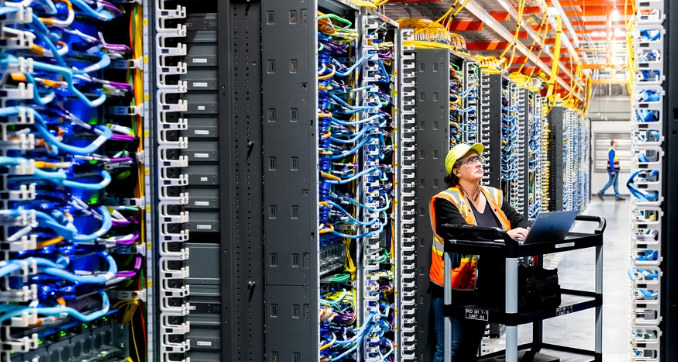
The state is experiencing unprecedented demand for AI driven data centers that require enormous amounts of electricity and water to operate and cool thousands of computer servers.
4. Energize NY Initiative
Earlier this year, the Governor launched the Energize NY proceeding through the Department of Public Service. The initiative would require future data centers to either pay more for electricity or supply their own energy, helping reduce the financial burden on other New York ratepayers.
5. Environmental Review Begins
During the one-year pause, the Department of Public Service will prepare a Generic Environmental Impact Statement evaluating statewide impacts on electricity demand, water resources, air quality, and environmental sustainability. Once finalized, new projects may proceed if they comply with state regulations, zoning requirements, and local approvals.
6. Community Benefits Required
Empire State Development must issue a Community Investment Framework within 60 days. The framework will guide negotiations for local infrastructure improvements, workforce development, prevailing wages, apprenticeships, child care investments, and direct financial support for host communities.
7. Grid Investment Plans
The Governor has also directed officials to study the creation of a New York Grid Acceleration Fund, which could require developers to help finance grid upgrades, battery storage, clean energy generation, and other infrastructure needed to support future data center growth.
8. Tax Incentives Under Review
The administration is pursuing legislation to eliminate sales tax exemptions currently available for large data center developments, potentially increasing development costs for future projects.
9. Major Projects in Limbo
Several large projects remain in focus, including the 500 MW STAMP campus in Genesee County, the planned 300 MW facility in Onondaga County, and TeraWulf’s Cayuga redevelopment, which could expand from 138 MW to 400 MW.
10. Power Demand Surges
The New York Independent System Operator (NYISO), operator of the state’s bulk electricity grid, projects 12,670 MW of new electricity load requests by 2030, more than twice New York City’s current electricity demand, with AI data centers expected to drive much of that growth.
How Does The Investment Delay Impact Commercial Real Estate?
1. Slower Development Pipeline
Industrial development sites targeted for hyperscale data centers may experience longer entitlement timelines as developers wait for the state’s new regulatory framework.
2. Higher Regulatory Risk
Investors now face greater regulatory risk when evaluating industrial land acquisitions, particularly sites requiring significant environmental approvals or utility infrastructure upgrades.
3. Power Becomes Premium
Utility capacity is becoming one of the most valuable assets in industrial real estate. Properties with existing high capacity power access and transmission infrastructure may become increasingly attractive once permitting resumes.
4. New Community Standards
The Community Investment Framework introduces a new factor into site selection. Developers will need to budget for stronger community partnerships, local hiring commitments, workforce development, and infrastructure investments.
5. Rising Development Costs
The proposed Grid Acceleration Fund could significantly increase development costs by requiring private investment in transmission systems, clean energy generation, battery storage, and grid modernization.
6. Changing Financial Models
The possible removal of sales tax exemptions could further change financial underwriting for future hyperscale developments, affecting project feasibility and investment returns.
7. Capital May Shift Elsewhere
Some developers may redirect capital toward neighboring states with faster approvals and fewer regulatory requirements, increasing competition for large industrial projects across the Northeast.
8. Infrastructure Is Everything
For commercial real estate investors, energy availability, regulatory certainty, environmental compliance, and community support are becoming just as important as location and land pricing.
What Can We Expect this 2026 and Beyond?
We believe New York has entered a defining moment for commercial real estate and AI infrastructure. The state is not rejecting data center investment. Instead, it is attempting to reshape how these facilities are planned, approved, powered, and integrated into local communities.
The Executive Order creates short-term uncertainty for developers with projects already in the pipeline, but it also provides a clearer direction for future investment. Companies that can demonstrate responsible energy use, community partnerships, grid investments, and environmental stewardship will likely be in the strongest position once permitting resumes.
For commercial real estate owners, investors, and brokers, the lesson is becoming increasingly clear. Infrastructure, power availability, public policy, and community engagement are now fundamental drivers of industrial real estate value. As AI demand continues to accelerate, the most successful developments will be those that can align technology growth with long-term sustainability and public support.
For the latest news, proven strategies, and exclusive opportunities in commercial real estate in New York City and Western Nassau County NY, visit us at www.nyccrea.com
FOLLOW US:
Facebook: www.facebook.com/newyorkcityCREA
Instagram: www.instagram.com/nyccrea
LinkedIn: www.linkedin.com/company/nyccrea