

October 21, 2026
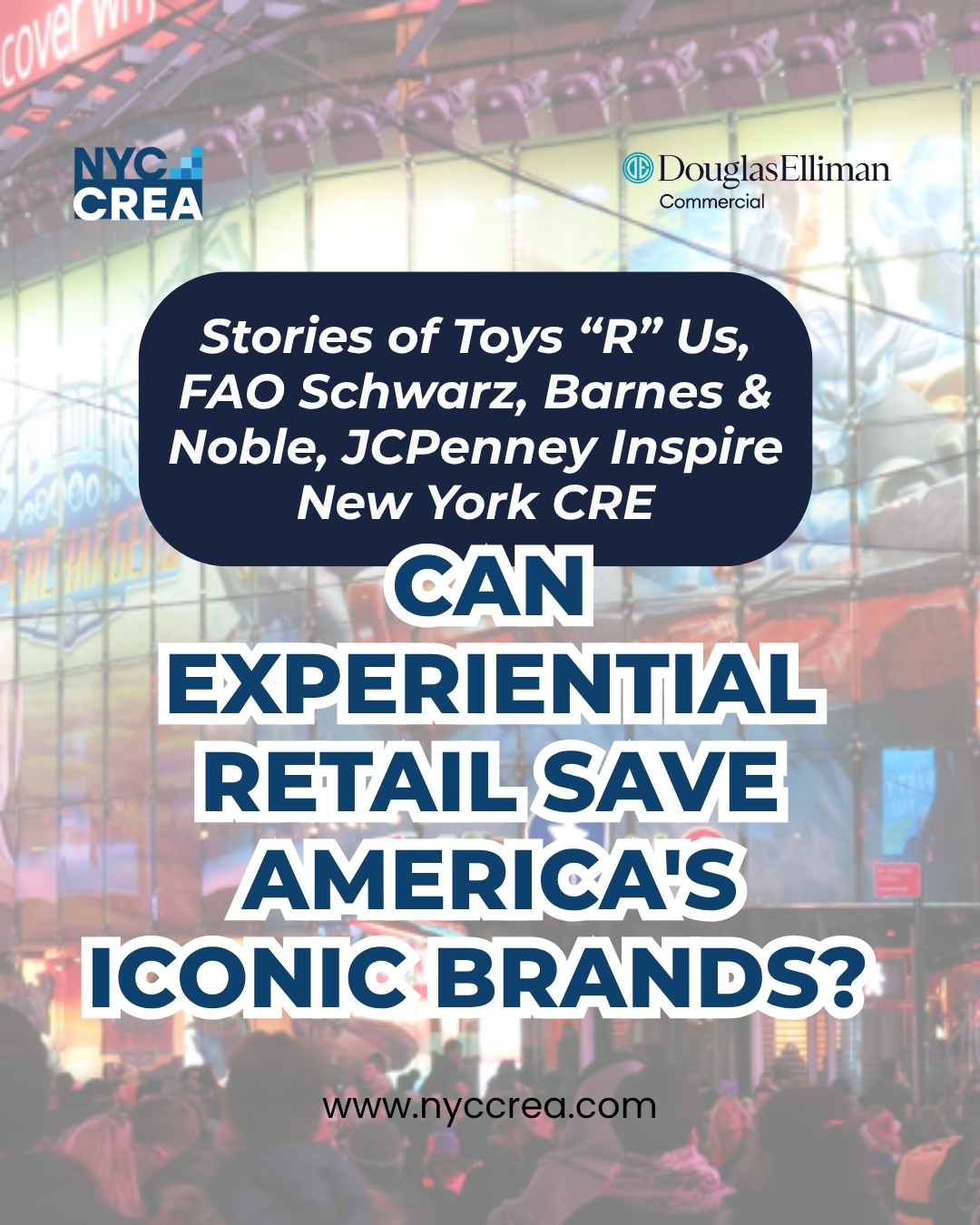
- Legacy brands are finding new ways to compete. FAO Schwarz is expanding through Nordstrom, Toys “R” Us plans 120 additional standalone stores, and Barnes & Noble is growing through locally curated bookstores and community experiences.
- Experiential retail is changing the value of physical space. Interactive displays, cafés, product customization, events, and personalized service give shoppers reasons to visit stores instead of buying everything online.
- New York CRE investors have an opportunity to reposition retail properties. The challenge is finding tenants with a clear customer proposition, sustainable operating economics, and experiences that generate repeat visits.
Why Are Iconic Retail Brands Making a Comeback in 2026?
Retail’s comeback story is not simply about reopening stores. It is about changing what those stores offer.
For years, e-commerce put pressure on traditional retailers by making shopping faster and often more convenient. Brands that relied on merchandise alone struggled to give customers a compelling reason to visit physical locations. Some disappeared, others filed for bankruptcy, and many reduced their store footprints.
Now, several familiar American brands are pursuing a different strategy. They are combining recognizable names with curated merchandise, interactive experiences, personalized services, and partnerships that extend their reach without requiring every brand to operate a large standalone store.
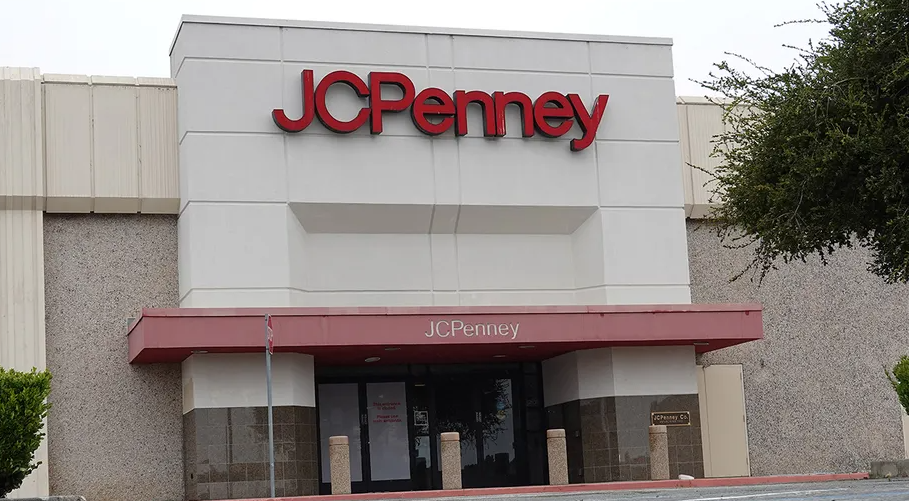
We see this shift in four distinct examples. FAO Schwarz is bringing its theatrical toy-shopping experience into Nordstrom. Toys “R” Us is planning a major expansion built around toys, collectibles, and entertainment. Barnes & Noble is demonstrating that physical bookstores can grow through localized merchandising and community engagement. JCPenney is repositioning its value proposition around quality, affordability, and a more reassuring shopping experience.
For New York City commercial real estate brokers and investors, these developments raise an important question. Can experiential retail help make physical properties more competitive, attract stronger tenants, and revitalize shopping destinations?
We believe the opportunity is real, but success depends on more than nostalgia or attractive store design. The business model, location, customer demand, and cost of occupying the space must all work.
Can Toys “R” Us Rebuild Its Retail Footprint Through Experience?
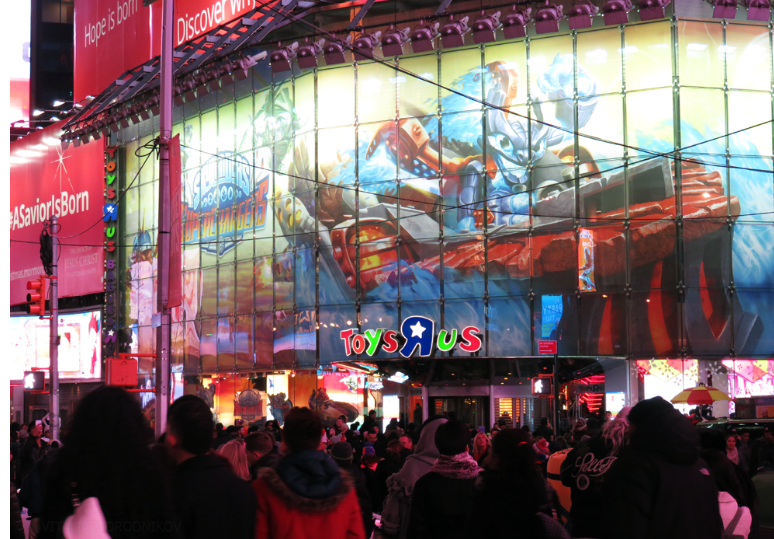
Toys “R” Us is an example of a legacy brand attempting to rebuild its physical presence.
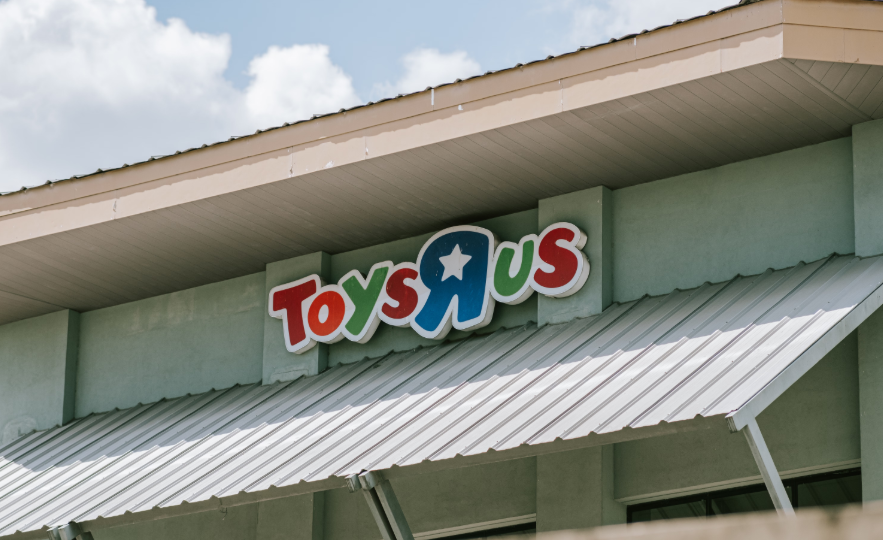
After filing for bankruptcy in September 2017 with approximately $5 billion in debt, the company closed its remaining U.S. stores in 2018. The company shut down over 700 U.S. locations after filing for bankruptcy protection.
Nine years after, on September 17, 2026, Toys “R” Us announced plans to open 120 standalone U.S. stores through its partnership with Go! Retail Group. The expansion would bring its standalone total from 40 to 160 for the 2026 holiday season.
The timing aligns with a strong period for the toy industry. Market research firm Circana reported that U.S. toy dollar sales increased 17% in the first half of 2026 compared with the same period in 2025. Unit sales rose 12%, while average selling prices increased 4%. Trading cards, collectibles, licensed products, and fandom-driven merchandise helped fuel the growth.
Toys “R” Us is also expanding the experience beyond browsing shelves. Select stores will feature Creator Studios for product launches and content creation, while some locations will include cafés and candy shops.
The brand is also exploring nontraditional locations, including airports and Navy Exchange locations.
Why Could This Strategy Matter for New York CRE?
For New York-area property owners, Toys “R” Us illustrates how a recognizable retail concept can serve as an anchor or destination tenant when its offering extends beyond merchandise.
A store that hosts product launches, demonstrations, and creator events may generate visits for reasons other than immediate purchases. Those visitors could also spend money at nearby restaurants, entertainment venues, and complementary retailers.
This could be particularly relevant to suburban shopping centers and mixed-use developments across Long Island and the wider New York metropolitan area.
However, we would not assume the planned national expansion guarantees new locations in New York City or any specific neighborhood. The company has not released a complete list of its 120 new stores.
For brokers, the practical takeaway is to assess which properties could support experiential retailers and to evaluate prospective tenants based on actual location plans, customer demand, and financial capacity.
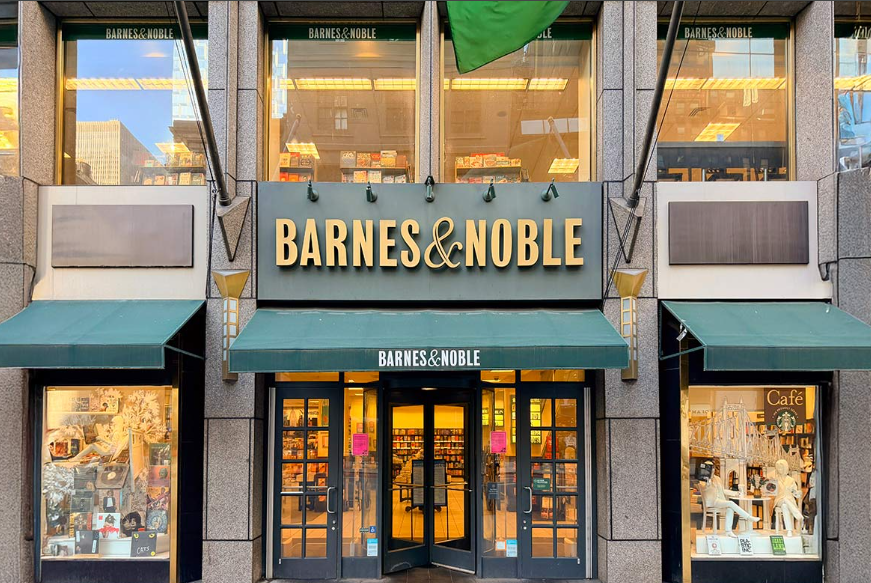
How Did Barnes & Noble Turn Bookstores Into Retail Destinations?
Barnes & Noble shows that experiential retail does not always require theatrical attractions or elaborate installations.
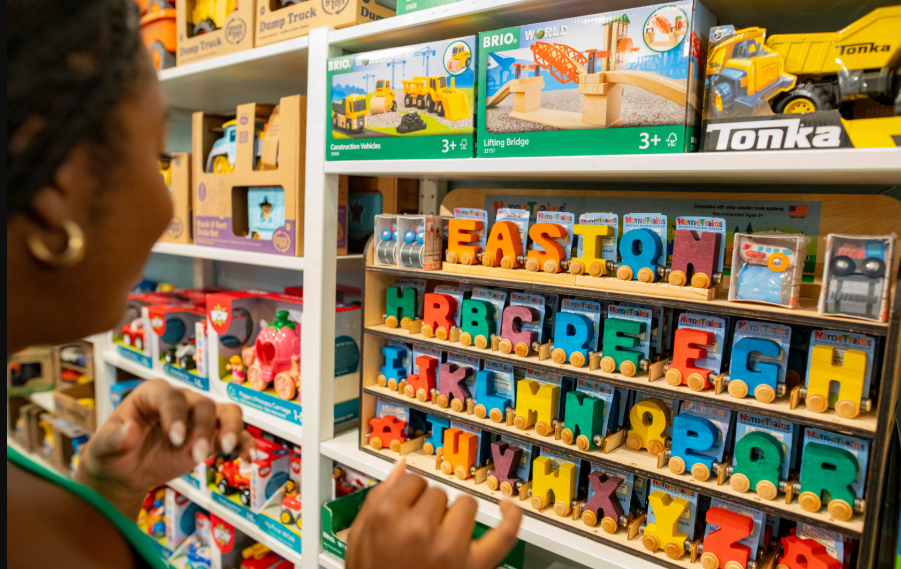
Its approach centers on curated book selections, locally tailored inventory, cafés, reading areas, gifts, toys, and author events. The objective is to make browsing enjoyable and give customers reasons to spend time in the store.
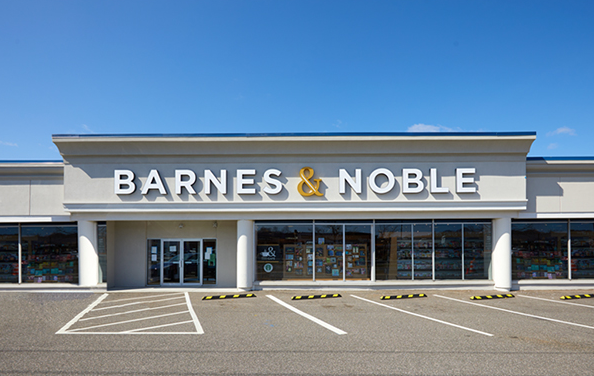
The strategy is producing a notable expansion. Barnes & Noble ended 2025 with 702 outlets, according to Publishers Weekly. Its 2026 plans called for another substantial wave of openings, following more than 60 new stores in 2025.
The company has also returned to markets where it previously closed stores. In January 2026, it opened a bookstore of more than 15,000 square feet in Washington, D.C.’s historic Woodies building, demonstrating how a retail concept can reactivate an existing urban property.
What Can New York Landlords Learn From Barnes & Noble?
We see three lessons.
- Local relevance matters.
A store that reflects the interests of its surrounding community has a stronger reason to attract repeat visits. For New York neighborhoods, this could mean programming, merchandise, and events tailored to local readers and families. - Retail space can support multiple uses.
Books, gifts, toys, cafés, and events allow a bookstore to serve different shopping needs within one location. A broader offering can help create activity throughout the day. - Existing properties can be part of a retail revival.
Barnes & Noble’s return to previously vacated markets shows how established brands can occupy existing retail space and help restore activity to commercial districts.
For landlords, this means looking beyond the next tenant’s rent check. A retailer that contributes to a property’s identity and encourages regular visits may help support the wider tenant mix.
Still, we should not treat Barnes & Noble’s expansion as proof that every large-format retail space can support a bookstore. Location, operating costs, local demand, and the availability of suitable floor plans remain essential.
How Is FAO Schwarz Revitalizing Its Brand Through Experiential Retail?
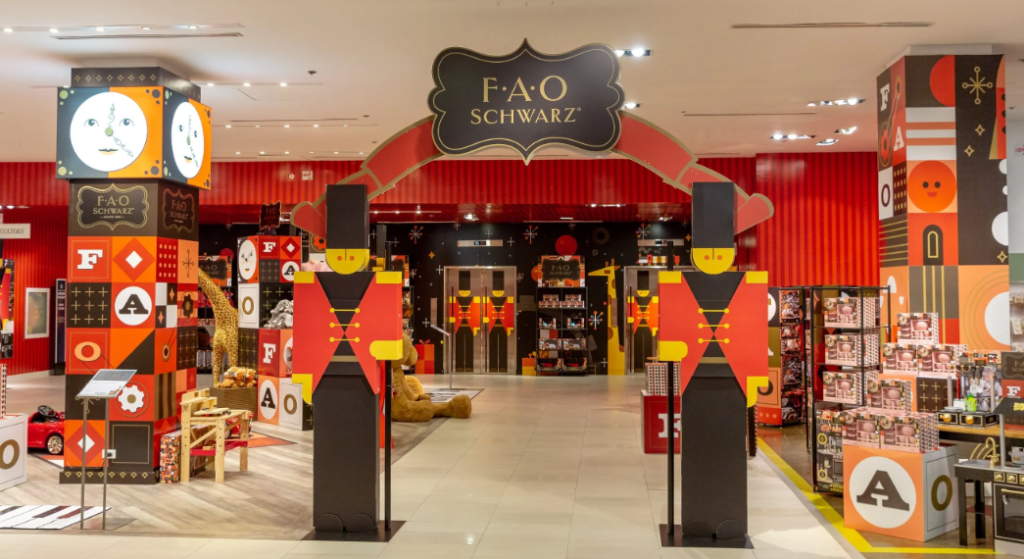
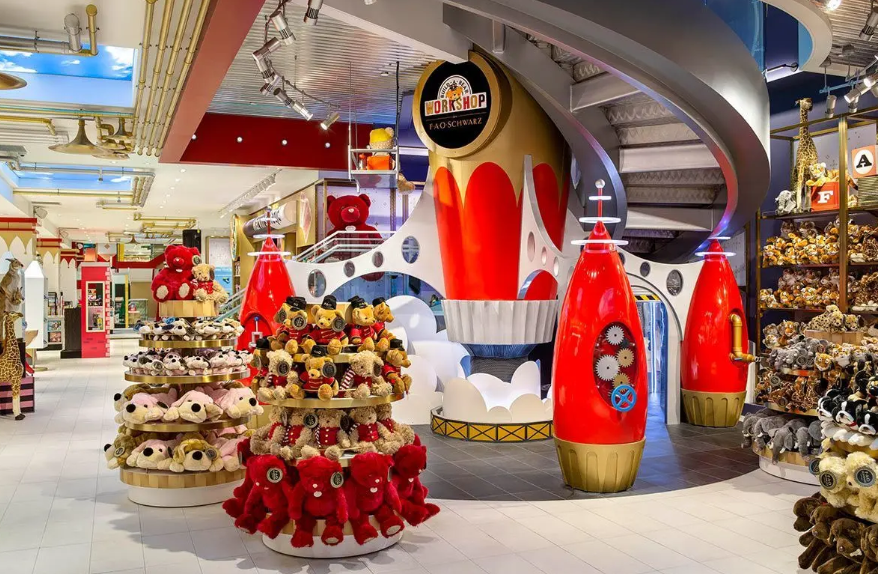
FAO Schwarz has opened its second Manhattan location inside Nordstrom’s flagship store on West 57th Street. It marks the first time in more than a century that the iconic toy retailer has operated two New York City stores simultaneously.
The opening is part of a broader strategic partnership announced by Nordstrom in June 2026. FAO Schwarz products are being introduced through Nordstrom.com, with merchandise and dedicated retail experiences expanding across the department store’s nationwide network.
The concept brings back the elements that made FAO Schwarz memorable. Visitors encounter toy soldiers, oversized stuffed animals, and the famous dance-on piano associated with the 1988 film Big. Interactive stations allow customers to personalize handbags, create makeup kits, adopt dolls with birth certificates, and customize Brio train sets.
This is more than adding another toy department to a department store. It gives families an experience that is difficult to reproduce through a product listing online.
For Nordstrom, the partnership introduces a recognizable family-oriented attraction into a flagship location. For FAO Schwarz, it provides access to another high-profile retail environment and a broader online and national distribution network.
What Does FAO Schwarz Mean for Manhattan Retail Properties?
The West 57th Street location demonstrates how retailers can use partnerships to expand their reach while potentially limiting the need for a separate, full-size store at every destination.
For Manhattan landlords, this creates several possibilities.
- Shared retail space can attract new customer groups.
A department store can bring in families, tourists, collectors, and gift shoppers who might not otherwise visit for its traditional merchandise alone. - Distinctive experiences can strengthen a property’s identity.
Interactive installations, recognizable characters, and hands-on activities can help a store stand out in a competitive retail corridor. - Partnerships can create new leasing opportunities.
Landlords and brokers can explore shop-in-shop concepts, branded installations, temporary activations, and collaborations between complementary retailers.
The lesson is not that every department store needs a toy store. It is that an established retailer can use carefully selected partnerships to make its physical location more relevant.
For property owners, the key is to identify partnerships that complement existing tenants, attract incremental traffic, and contribute enough revenue to justify the space.
Can JCPenney Revitalize Its Business Through Value and Customer Experience?
JCPenney’s strategy offers a useful contrast to the more entertainment-focused approaches of FAO Schwarz and Toys “R” Us.
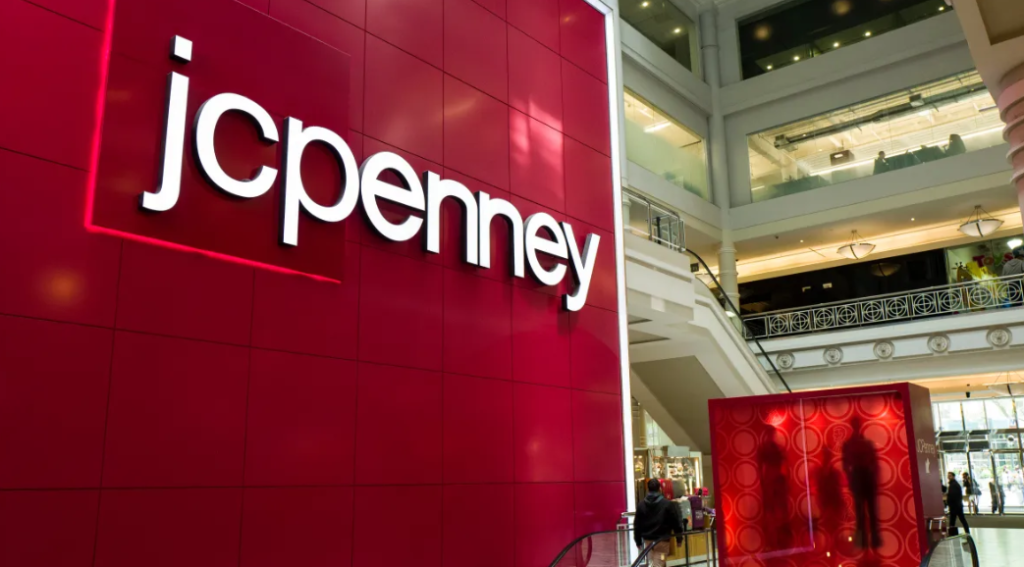
The department store filed for Chapter 11 bankruptcy in May 2020 during the COVID-19 pandemic. It was subsequently acquired through a transaction involving mall operators Simon Property Group and Brookfield Properties, alongside minority owner Authentic Brands Group. The retailer has continued operating a reduced national footprint compared with its 846 stores in 2020.
In August 2026, JCPenney introduced its “Retail Rejuvenation” campaign, positioning the brand around accessible prices, trusted merchandise, and a more satisfying shopping experience.
Rather than relying primarily on nostalgia, the campaign addresses common shopping frustrations, including difficulty finding the right size, dissatisfaction with purchases, and uncertainty about value.
JCPenney also highlighted its broader assortment of fashion, beauty, jewelry, home goods, salons, optical services, and portrait studios.
The company reported several encouraging results from its own consumer surveys.
- 88% of surveyed discount shoppers said shopping at JCPenney was easy.
- 76% said they found what they came for in their size.
- 87% of surveyed budget-conscious customers said a visit was worth their time.
- 92% of respondents in a separate survey said they got a good deal.
These figures come from JCPenney’s own research, not an independent measurement of retail performance. They indicate how the company is positioning its customer proposition, but they do not establish that the campaign has increased sales or reversed the retailer’s broader challenges.
What Does JCPenney’s Strategy Mean for Shopping Mall Owners?
JCPenney highlights an important point for commercial real estate. Experiential retail does not always mean adding entertainment or attractions. Convenience, service, product availability, and confidence in the purchase can also improve the physical shopping experience.
For mall owners, the question is whether a department store can continue serving as an effective anchor while adapting to changing customer expectations.
For brokers, it is an opportunity to evaluate the role of service-oriented retail in a property’s tenant mix. Salons, optical services, beauty counters, portrait studios, and home merchandise can attract customers with different needs and potentially create more reasons to visit.
However, JCPenney’s reduced footprint is a reminder that a new marketing campaign alone cannot resolve every retail challenge. Investors should examine store-level economics, occupancy costs, customer demand, and the long-term financial health of the tenant.
What Do These Retail Revivals Tell Us About Experiential Retail in New York?
The four brands illustrate different approaches to the same challenge.
| Brand | Revitalization strategy | Potential CRE impact |
|---|---|---|
| FAO Schwarz | Interactive play, personalization, and department-store partnerships | Opportunities for shop-in-shop concepts and destination retail |
| Toys “R” Us | Standalone expansion, collectibles, creator events, and cafés | Potential demand for experiential retail and family-oriented tenants |
| Barnes & Noble | Curated merchandise, cafés, local programming, and store expansion | Opportunities to reactivate existing retail space and build neighborhood destinations |
| JCPenney | Value, product availability, and a broader service offering | A reminder that useful services and affordable merchandise remain important to mall performance |
For New York City and Western Nassau County, we see several implications.
1. Could Experiential Retail Help Revitalize Vacant Storefronts?
Potentially, yes. A vacant retail space can become more attractive when it supports an activity customers want to experience in person.
Manhattan’s major shopping corridors may be suited to destination concepts that appeal to tourists and residents. Brooklyn and Queens may offer opportunities for neighborhood-oriented retailers, family experiences, and community events. In Western Nassau County, shopping centers could benefit from combinations of retail, dining, personal services, and entertainment.
The fit depends on the property’s location, access, size, frontage, and surrounding customer base.
We would also evaluate the cost of converting the space. Interactive installations, food service, and event areas may require additional investment in electrical systems, plumbing, accessibility, storage, and other building infrastructure.
A compelling concept is only commercially viable when the space can accommodate it at a sustainable cost.
2. Will Experiential Retail Increase Foot Traffic and Tenant Sales?
Experiential concepts can give shoppers reasons to visit, but foot traffic alone does not guarantee profitability.
A toy store may attract families for a product launch, a bookstore may bring in readers for an author event, and a department store may attract customers through a specialized brand partnership. The commercial value depends on how those visits translate into sales, repeat visits, and spending elsewhere in the property.
We recommend that landlords track measurable indicators, including:
- Visitor counts and repeat visits.
- Sales per square foot where available.
- Conversion rates from visits to purchases.
- Average transaction values.
- Event attendance and post-event spending.
- Tenant retention, rent collections, and occupancy costs.
These metrics help determine whether an experiential concept contributes to the property’s financial performance rather than simply making the space look busy.
3. Could Brand Partnerships Become More Important Than Traditional Store Expansion?
FAO Schwarz’s partnership with Nordstrom shows how a retailer can extend its reach through another company’s existing physical and digital channels.
This approach can reduce the need to build an entirely separate store in every market while allowing the brand to reach new customers. For landlords, it also creates opportunities to consider smaller branded installations and complementary retail concepts.
We expect partnerships to be worth examining when a landlord is repositioning a department store, filling a large retail unit, or seeking to improve the tenant mix without relying entirely on traditional anchor tenants.
The key is to understand the commercial arrangement. A partnership must generate enough value for both brands and the property owner to justify the space, staffing, and operating costs.
4. What Risks Should Retail Property Investors Watch?
The return of an iconic brand does not automatically mean a successful retail investment.
Toys “R” Us previously operated hundreds of stores before its U.S. business collapsed. JCPenney’s reduced footprint shows that legacy retailers can remain under pressure even after ownership changes and marketing initiatives. Barnes & Noble and FAO Schwarz, meanwhile, illustrate how expansion and partnerships can create new opportunities, but their approaches are not interchangeable.
Before committing capital, we would examine tenant creditworthiness, lease structure, renewal options, sales performance, capital expenditure requirements, and the surrounding market.
We would also assess seasonality. A store that performs exceptionally well during the holiday season must still generate sufficient revenue during quieter months.
For investors acquiring shopping centers or repositioning urban retail assets, conservative underwriting remains essential. Experiential retail should be evaluated as a business strategy with measurable costs and returns, not as a guaranteed solution to vacancy.
What Should New York CRE Brokers and Investors Do Next?
The revival of Toys “R” Us, Barnes & Noble, FAO Schwarz, and JCPenney shows that established retailers are not all following the same path. Some are expanding through partnerships. Others are opening new locations, curating their merchandise, adding services, or changing how they communicate value.
What connects these strategies is the effort to make physical retail more relevant to customers.
For us at NYCCREA, that creates three priorities.
First, market the experience a property can deliver.
When representing a retail space, we should explain how its layout, location, visibility, and surrounding businesses could support customer engagement. Landlords should consider whether the space can accommodate demonstrations, events, food and beverage, or specialized services.
Second, match the concept to the market.
A destination toy store, neighborhood bookstore, and value-oriented department store have different space requirements and customer profiles. We need to assess the demographics, spending patterns, accessibility, competition, and leasing economics of each property before recommending a tenant strategy.
Third, prioritize sustainable occupancy over temporary excitement.
A high-profile opening may generate initial traffic, but long-term value depends on repeat visits, sales productivity, tenant financial strength, and realistic rent obligations.
The bigger picture is that experiential retail is changing how we evaluate commercial space. A storefront is no longer just a place to display products. It can be a destination, a service hub, a community gathering point, or a platform for a brand to connect with customers.
For New York commercial real estate, the opportunity is to identify properties that can support these uses and connect them with retailers whose business models fit the market.
The brands that succeed will not necessarily be the ones with the strongest nostalgia. They will be the ones that translate customer interest into repeat business and sustainable operations.
For more insights and commercial opportunities in New York City and Western Nassau County, follow us.
Andreas Nakos
Licensed Associate Real Estate Broker
917.886.6918
andreas.nakos@elliman.com
Steven Llorens
Licensed Associate Real Estate Broker
917.830.7091
steven.llorens@elliman.com